#Diagnostics & troubleshooting
This fault can also appear after the multimedia system restarts. A weak battery or voltage drop during startup can also trigger it repeatedly.
Most common car fault codes and what they mean (+ how to detect them on time)


TL;DR: The most common fault codes detected by OBDeleven include U112300, U112100, U140000, U101100, U101400, U105400, B201A00, C102D00, B1168F2, and P030000. They most often point to communication issues, low voltage, incorrect coding, tire pressure warnings, steering sensor calibration, or engine misfires.
OBDeleven devices run diagnostic scans on 6M+ vehicles around the world every day. We looked at the fault codes our users encounter most often and grouped them by the type of problem they point to.
Some codes are tied to a specific system, such as the engine, steering, or tire pressure monitoring. Others are broader and may appear because of low battery voltage or incorrect module coding.
Below, we explain what the most common codes mean, what may cause them, and what you can check next.
How to read a car fault code
The first letter tells you which part of the vehicle the fault relates to:
- P – Powertrain: engine, transmission, and emissions
- C – Chassis: steering, brakes, suspension, and related systems
- B – Body: interior electronics, comfort features, airbags, and lighting
- U – Network: communication between control modules
Most codes in this article have a two-digit suffix (P030000 instead of P0300). That's how Volkswagen Group vehicles report faults – the last two digits describe the failure type in more detail.
For a step-by-step walkthrough, see how to read OBD codes (DTCs) with OBDeleven here.
One more thing worth knowing: basic OBD2 scanners often focus mainly on powertrain (engine) codes. More advanced diagnostic tools, like OBDeleven 3, can scan all available control modules across the vehicle, which gives you a much clearer picture of what is actually going on.
Top 10 fault codes detected most often by OBDeleven
| Fault code | Definition | What it means | What may help |
| U112300 |
Data bus: error value
received
|
One module received data from
another module, but the value did
not make sense.
|
Scan all control modules for related faults, clear
the code, and see whether it returns. If several
modules log communication faults, check the battery, wiring, and connectors first. The issue could also result from a coding error, such as one introduced during a retrofit installation.
|
| U112100 |
Data bus: missing
message
|
One module was waiting for
information from another module but
never received it.
|
Check whether the sending module has its own
faults or has gone offline. Low voltage, loose
connectors, damaged wiring, a blown fuse or incorrect coding
may also be behind it.
|
| U140000 |
Function restriction due
to low voltage
|
The car temporarily limited some
functions because battery voltage
dropped too low.
|
Charge and test the battery first. If the fault
returns, check the alternator and the rest of the
charging system, then clear the code once the
voltage is back to normal.
|
| U101100 |
Supply voltage: voltage
too low
|
A control module did not receive
enough power to work properly.
|
Test the battery and charging system. If the
voltage is fine, check the fuse, power supply,
ground connection, and wiring to the affected
module.
|
| U101400 |
Control module
incorrectly coded
|
A control module is using settings
that do not match the vehicle's
equipment or configuration.
|
This often appears after a module has been
replaced, retrofitted, or recoded. Restore the
previous coding if it was changed, or code the
module to match the car.
|
| U105400 |
Information Electronics
Control Module 1: no
communication
|
The car could not communicate with
the infotainment control module.
|
Check whether the infotainment system turns on
and look for related faults. Fuses, wiring,
connectors, or a weak battery may be involved.
|
| B201A00 |
Check Software Version
Management (SVM)
|
The car found a possible mismatch
between the coding, software
version, and expected vehicle
configuration.
|
Check whether the module was recently updated, replaced, or coded. It may need a software update, an SVM check, or corrected coding – which is available with OBDeleven’s PRO plan. |
| C102D00 | Tire pressure warning |
One or more tires may be
underinflated, overinflated, or losing
pressure.
|
Check all four tires when cold, adjust them to the recommended pressure, and inspect for punctures or damage. Then reset the TPMS. If the tires are fine and the fault does not clear, check the ABS and other control units for related errors. |
| B1168F2 |
Steering angle sensor:
no initialization
|
The steering angle sensor has not
learned the steering center position.
|
Perform a steering angle calibration or basic
setting, especially after battery disconnection,
wheel alignment, or steering repairs.
You can try turning the steering wheel fully to the right, holding it briefly, then fully to the left before returning it to the center. A short drive may also clear the fault.
|
| P030000 |
Random misfire
detected
|
The engine is misfiring, but the fault
is not limited to one specific cylinder.
|
Check spark plugs, ignition coils, injectors, fuel
delivery, air leaks, and compression.
Cylinder-specific fault codes can help narrow it
down. Avoid driving hard if the engine is shaking.
|
Want to get notifications to your phone when these fault codes appear or disappear without having to plan scans? You can do that with OBDeleven’s new feature, Car alerts.
All you need is an OBDeleven 3 device – keep it plugged into your car and get a ping when something changes. This way, you can act fast and minimize the chances of costly repairs later.
Why the same codes keep coming up: 5 common categories
The codes above aren't random – they fall into five groups, and each group tends to have a shared root cause.
Knowing the group often tells you where to start looking.
1. Communication and data bus faults
Modern vehicles have dozens of control modules sharing information over internal networks. When one module sends incorrect data, stops responding, or drops offline, other systems log a communication fault.
That does not always mean the module that logged the fault is broken. The real cause could be low battery voltage, damaged wiring, a loose connector, outdated software, or a fault in a completely different module.
From the top 10, U112300, U112100, and U105400 belong to this group. Another one we see often:
| Fault code | Definition | What it means | What may help |
| U111000 |
Function restriction due
to communication
interruption
|
A feature was limited because
communication between control
modules was interrupted.
|
Look for other communication and low-voltage
faults. If the problem stays active, the wiring,
connectors, or affected module may need further diagnosis.
This fault can also appear after the multimedia system restarts. A weak battery or voltage drop during startup can also trigger it repeatedly. |
This fault can also appear after the multimedia system restarts. A weak battery or voltage drop during startup can also trigger it repeatedly.
Pro tip: A single communication code may be temporary. A large number of them appearing at the same time usually points to a shared cause – most often a weak battery or unstable power supply.
2. Low-voltage and battery-related faults
A weak battery causes far more than slow starting. When voltage drops, control modules may switch off features, stop communicating, or record faults that look completely unrelated to the battery.
This commonly happens after:
- Cold weather
- Long periods without driving
- Frequent short trips
- Jump-starting
- Battery replacement or disconnection
- Alternator or charging-system problems
From the top 10, U140000 and U101100 belong here. So does this one:
| Fault code | Definition | What it means | What may help |
| U140600 | Static current too large |
The car detected unusually high
power use while parked.
|
Check for battery drain: aftermarket accessories,
lights staying on, or modules that are not
entering sleep mode.
|
Don't assume every low-voltage code means the battery needs replacing. A poor ground connection, damaged cable, failing alternator, or a device drawing power while parked can produce the same symptoms.
3. Coding, software, and calibration faults
These faults usually appear after work has been done on the vehicle:
- Coding changes
- Software updates
- Retrofits
- Battery disconnection
- Wheel alignment
- Module replacement
- Steering or suspension repairs
In many cases, the module itself is fine. It simply needs the correct coding, software version, or calibration procedure.
From the top 10, U101400 and B201A00 belong to this group, along with:
| Fault code | Definition | What it means | What may help |
| B201000 | No basic setting |
A required calibration or adaptation
has not been completed.
|
Run the relevant basic setting. Depending on the
system, this may involve the steering angle
sensor, throttle, windows, headlights, or another
component.
|
Pro tip: If a code appears right after repairs or coding, start by reviewing what changed. That is almost always more useful than replacing parts.
4. Tire, steering, and driver-assistance faults
These codes cover tire pressure monitoring, steering angle sensing, adaptive cruise control, lane assistance, and other driver-assistance features.
Some point to a real hardware problem. Others are triggered by low voltage, dirt, snow, a wheel alignment, battery disconnection, or a sensor that simply needs recalibration.
From the top 10, C102D00 and B1168F2 belong here. Another frequent one:
| Fault code | Definition | What it means | What may help |
| C110BF0 |
Adaptive cruise control
sensor: limited visibility
|
The ACC sensor cannot see the
road clearly enough to work
properly.
|
Clean the sensor area and check for dirt, snow,
ice, stickers, bumper damage, or sensor misalignment. The fault may also appear if the radar is loose or not properly secured in place.
|
Driver-assistance systems rely on precise sensor data. Even a slightly misaligned sensor or a dirty radar cover can be enough to trigger a warning.
5. Engine and transmission faults
Engine and transmission codes tend to be more specific than communication faults – and they deserve attention sooner, especially when the car is showing symptoms. Take it seriously if:
- The check engine light is flashing
- The engine is shaking or running roughly
- Power is reduced or the vehicle enters limp mode
- The transmission slips or shifts harshly
From the top 10, P030000 belongs to this group. Two more we see regularly:
| Fault code | Definition | What it means | What may help |
| P029900 |
Turbocharger or
supercharger
underboost
|
The engine is not reaching the
expected boost pressure.
|
Inspect boost hoses, intercooler pipes, clamps,
vacuum lines, the turbo actuator, and
boost-pressure sensor readings.
|
| P072B–P073B |
Transmission stuck in
reverse or gears 1–6
|
The transmission detected that it
may be stuck in a particular gear.
|
Scan the transmission control module and check
the fluid condition where applicable. Do not
ignore harsh shifting, slipping, or limp mode.
|
A flashing check engine light or a severe misfire is urgent – far more so than a stored communication code. Continuing to drive with a serious misfire can damage the catalytic converter, which is an expensive repair.
What to do when a scan shows a fault
First, don't panic. A fault code can point to a bigger issue that needs fixing – but it can just as easily be a minor problem or even a one-off glitch.
To get to the bottom of it:
- Check whether the fault is active or intermittent. An old, stored code is far less urgent than one that keeps coming back.
- Scan all available control modules. Related codes and freeze-frame data across other systems often reveal the real cause.
- Note the context. Symptoms, warning lights, and any recent work done on the car are all clues.
- Start with the simple checks: battery voltage, fuses, fluid levels, tire pressure, and loose connectors.
- Look up the code. The OBDeleven app shows fault descriptions, and searching the code online can help you find common issues for your model.
- Fix the underlying cause – then clear the code and scan again to confirm it doesn't return.
Avoid replacing a part just because its name appears in the fault description. Codes tell you where the problem was noticed, not necessarily what caused it.
Important note: If the car is shaking when idle, overheating, losing power, shifting badly, or showing a flashing check engine light, stop driving and get it checked.
Active vs. intermittent fault codes
Here’s the good news – not every stored fault is a problem right now.
A static (active) code means the vehicle can currently detect the problem. It will usually return immediately after being cleared, until the cause is fixed.
An intermittent (passive) code means the problem happened before but is not present at the moment. It may have been caused by a temporary voltage drop, a loose connection, or a brief communication interruption.
Some warning lights switch off on their own after the issue stops appearing for a certain number of drive cycles. The stored code stays behind, though, and that history is useful. It lets you see what happened earlier, even if the warning disappeared before you had time to scan the car.
Keep track of faults between scans with Car alerts
Fault codes don't always appear while you happen to be scanning. Some problems are intermittent and only show up under certain driving conditions.
With an OBDeleven 3 device staying connected to the car, Car alerts can monitor changes in OBD2 fault activity and notify you when something new is detected – so you can catch a problem early. No need to wait for a warning light or a noticeable symptom.
While Car alerts don't replace a professional inspection, they give you a way to keep an eye on your car between scans and spot changes worth investigating. If you see something suspicious, you can run a full diagnostic scan and decide on the best course of action.
A fault code is a clue, not a diagnosis
An OBD code does not automatically mean something has failed. A misfire code does not tell you to replace the spark plugs without further checks. And a low-voltage code does not always mean the battery is bad.
What a code gives you is a starting point.
Here, OBDeleven helps you scan the whole vehicle, see which systems are affected, understand the fault descriptions, and track how things change over time. Equipped with this, you can decide with confidence whether it's something you can sort out yourself or a job for the workshop.

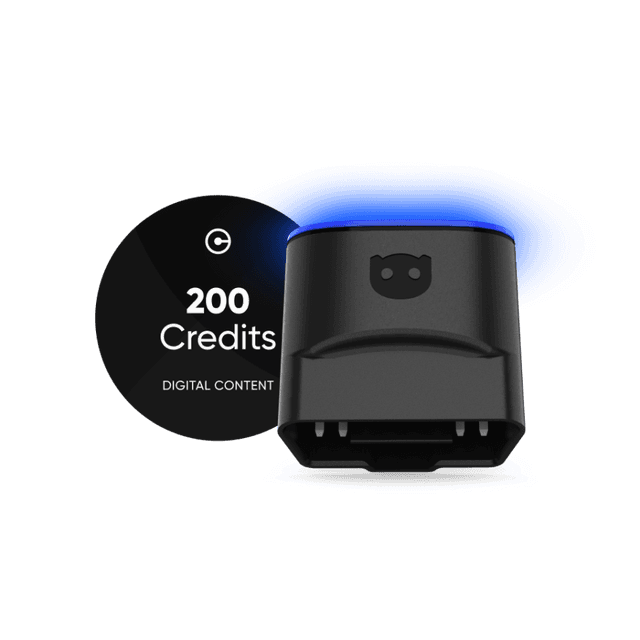
OBDeleven 3 device + 200 Credits
Includes OBDeleven 3 device and 200 Credits for unlocking car features with One-Click Apps
€114.99€91.99
20% OFF
Exclusive deal
Disclaimer: Advice, how-to guides, and car care tips on our blog are intended as helpful resources for general maintenance and repairs. While we strive for accuracy, the information is provided to the best of our knowledge and should be used at your own discretion and risk.
Always refer to your vehicle’s owner’s manual or consult a certified mechanic for specific repair details and safety procedures.
Always refer to your vehicle’s owner’s manual or consult a certified mechanic for specific repair details and safety procedures.