#Diagnostics & troubleshooting
Exhaust gas recirculation flow insufficient detected
Code P0401 means your vehicle has detected a problem with its exhaust gas recirculation (EGR) system.
In simpler terms, this error code appears when the engine control module detects that not enough exhaust is being returned to the engine.
The EGR system reduces harmful emissions by recycling a portion of exhaust gases back into the engine. This clever process lowers combustion temperatures and reduces nitrogen oxide (NOx) emissions, which contribute to air pollution.
Here's how it works: When your engine runs, the exhaust gases normally exit through the exhaust system. And when the EGR valve opens, the system redirects some of these gases back into the engine cylinders instead of letting them all out.
Your engine's control unit opens the EGR valve at specific times, allowing exhaust gases to flow from the exhaust manifold to the intake manifold and back into the combustion chamber.
To do this job, the EGR system relies on two main components:
The picture below shows how this system operates:
The basic scheme of the EGR system. Source: jct600.co.uk
As exhaust gases flow through the system, they leave carbon deposits behind. Over time, this carbon buildup can clog the valve and related components, preventing proper operation.
Sometimes, cleaning helps. But often, when the system fails, your best bet is replacing the EGR valve entirely.
Read more: What is EGR valve?
The P0401 code is critical and needs to be addressed as quickly as possible.
A malfunctioning EGR system can lead to engine overheating, potential engine knock, reduced fuel efficiency, and higher emissions.
In the end, it can even result in a failed emissions test and fines that come with it.
Technically, yes, but not recommended.
Getting it checked out sooner than later can help you avoid more serious problems. Your car will still run, but prolonged driving risks engine damage from higher combustion temperatures.
Worst case scenario? You hear the engine knocking or pinging. It that case, it's best to pull over and call a tow truck.
While the most common symptom of P0401 fault code is the illuminated check engine light, remember to pay attention to other less common cues, such as:
Try these methdods and tips to diagnose and fix the P0401 code accurately:
First, use your code reader to clear the P0401 fault code from your car's memory. Then, proceed depending on which outcome you get:
If the code immediately returns: Skip the test drive – you've got an ongoing issue that needs immediate attention.
If the codes clear successfully: Take your car for a 15-minute drive to warm up the engine and see how it behaves.
After your test drive, scan again. If the code returns, you've confirmed a persistent problem that needs fixing.
One of the most common culprits for the P0401 code is the carbon buildup in the EGR valve. Cleaning it can help – here’s how to do it step by step:
1. Locate and remove the EGR valve
It's typically mounted between the intake and exhaust manifolds. If you'rehaving trouble finding it, take a look at your car's service manual.
2. Inspect the valve's condition
Check the valve stem and passages for thick carbon deposits. Ideally, the valve should move freely when you push it gently.
3. Clean thoroughly with appropriate cleaner
Use carb cleaner spray or throttle body cleaner on the carbon deposits and let them soak. Then gently scrub with a soft wire brush or toothbrush, paying special attention to the valve seat and stem.
4. Test valve movement
After cleaning, the valve's stem should move freely with light pressure. However, if it's an electronic EGR valve, you may not be able to move it by hand.
5. Clean the EGR passages
While the valve is removed, shine a flashlight to find the EGR port in the intake manifold. Use a pipe cleaner, small brush, or cloth-covered screwdriver dipped in cleaner to clear away any carbon buildup from the port too.
6. Inspect for damage
Carefully examine the valve for cracks, warping, broken spring, or damaged sealing surfaces. On vacuum-operated models, it's important to double-check the valve seat and diaphragm. If you find any physical damage, corrosion, or signs of heat damage like warping, cleaning won't fix the issue – you'll need to replace the valve entirely.
7. Install a new gasket
Always use a new gasket when reinstalling the EGR valve to prevent exhaust leaks.
8. Reinstall the valve and reconnect components
Mount the clean valve, tighten the bolts to the proper torque specification, and reconnect all electrical connectors and vacuum lines.
9. Clear the fault codes and test
After cleaning and reinstalling everything, use your OBD scanner to clear the fault codes. Then, take your vehicle for a test drive to see if the code returns.
If your car still shows the P0401 code, check the vacuum system for leaks. Inspect vacuum hoses for cracks, holes, or disconnections and replace any damaged ones.
For a more thorough check, you can also try a smoke machine test. This method fills the system with smoke, which escapes from any cracks, holes, or loose connections, making it easy to pinpoint the exact location of a leak.
The cost to fix the P0401 code varies depending on the underlying cause:
Be prepared to spend more if you own a luxury vehicle – the costs for parts and labor are typically higher for them. But there’s a way to save money, no matter what kind of vehicle you have.
Always refer to your vehicle's owner's manual or consult a certified mechanic for specific repair details and safety procedures.
P0401 – Exhaust gas recirculation (EGR) flow insufficient detected


Technical definition
Exhaust gas recirculation flow insufficient detected
What does P0401 mean?
Code P0401 means your vehicle has detected a problem with its exhaust gas recirculation (EGR) system.
In simpler terms, this error code appears when the engine control module detects that not enough exhaust is being returned to the engine.
What is the EGR system?
The EGR system reduces harmful emissions by recycling a portion of exhaust gases back into the engine. This clever process lowers combustion temperatures and reduces nitrogen oxide (NOx) emissions, which contribute to air pollution.
Here's how it works: When your engine runs, the exhaust gases normally exit through the exhaust system. And when the EGR valve opens, the system redirects some of these gases back into the engine cylinders instead of letting them all out.
Your engine's control unit opens the EGR valve at specific times, allowing exhaust gases to flow from the exhaust manifold to the intake manifold and back into the combustion chamber.
To do this job, the EGR system relies on two main components:
- EGR valve: Controls the flow of exhaust gases into the intake manifold
- Vacuum line (in vacuum-operated systems): Controls the valve's position
The picture below shows how this system operates:

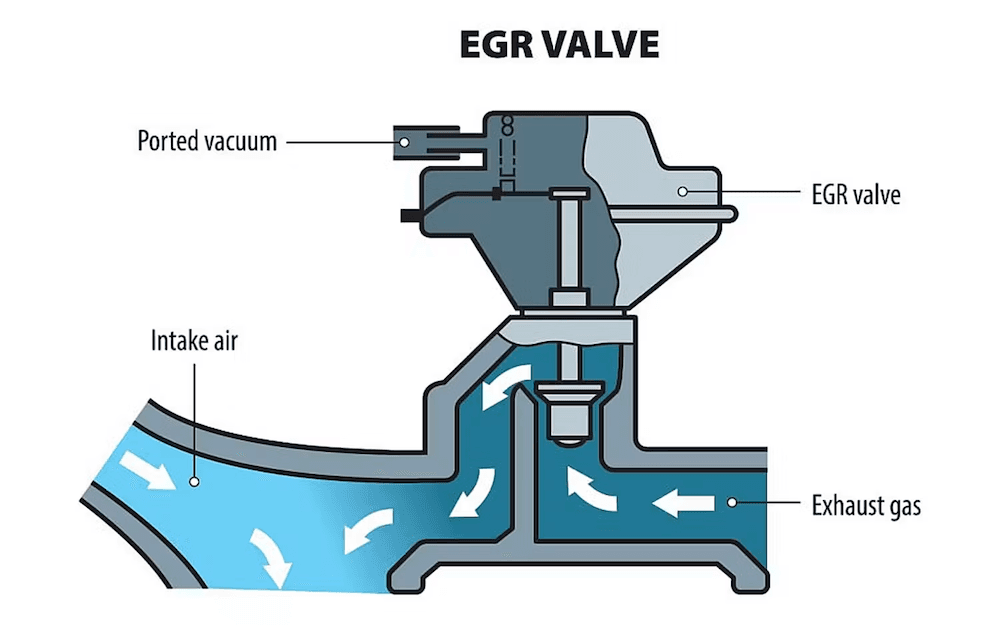
The basic scheme of the EGR system. Source: jct600.co.uk
Does your car use the EGR system all the time?
No, it stays closed during hard acceleration because your engine needs oxygen-rich fresh air for maximum power. It also closes at idle to prevent rough running.
As exhaust gases flow through the system, they leave carbon deposits behind. Over time, this carbon buildup can clog the valve and related components, preventing proper operation.
Sometimes, cleaning helps. But often, when the system fails, your best bet is replacing the EGR valve entirely.
Read more: What is EGR valve?
How serious is the P0401?
The P0401 code is critical and needs to be addressed as quickly as possible.
A malfunctioning EGR system can lead to engine overheating, potential engine knock, reduced fuel efficiency, and higher emissions.
In the end, it can even result in a failed emissions test and fines that come with it.
Can I still drive with P0401?
Technically, yes, but not recommended.
Getting it checked out sooner than later can help you avoid more serious problems. Your car will still run, but prolonged driving risks engine damage from higher combustion temperatures.
Worst case scenario? You hear the engine knocking or pinging. It that case, it's best to pull over and call a tow truck.
Symptoms of P0401
While the most common symptom of P0401 fault code is the illuminated check engine light, remember to pay attention to other less common cues, such as:
- Rough idling
- Engine knocking or pinging under load
- Decreased fuel efficiency
- Failed emissions test
- Increased engine temperature
Common causes of P0401
Carbon buildup and clogs
- Clogged EGR valve from carbon deposits
- Blocked EGR passages in the intake manifold
Mechanical issues
- Faulty EGR valve not opening properly
- Stuck or damaged EGR valve diaphragm
- Broken return spring
Vacuum and electrical problems
- Leaking vacuum lines (for vacuum-operated systems)
- Faulty EGR solenoid
- Wiring issues in the EGR circuit
- Failed differential pressure feedback (DPFE) sensor
- Malfunctioning EGR temperature sensor
How to troubleshoot P0401
Try these methdods and tips to diagnose and fix the P0401 code accurately:
Clear the codes and test drive
First, use your code reader to clear the P0401 fault code from your car's memory. Then, proceed depending on which outcome you get:
If the code immediately returns: Skip the test drive – you've got an ongoing issue that needs immediate attention.
If the codes clear successfully: Take your car for a 15-minute drive to warm up the engine and see how it behaves.
After your test drive, scan again. If the code returns, you've confirmed a persistent problem that needs fixing.
Pro tip: Pay attention to any other trouble codes that appear during your scan – they often provide valuable clues.
Inspect and clean EGR valve
One of the most common culprits for the P0401 code is the carbon buildup in the EGR valve. Cleaning it can help – here’s how to do it step by step:
1. Locate and remove the EGR valve
It's typically mounted between the intake and exhaust manifolds. If you'rehaving trouble finding it, take a look at your car's service manual.
2. Inspect the valve's condition
Check the valve stem and passages for thick carbon deposits. Ideally, the valve should move freely when you push it gently.
3. Clean thoroughly with appropriate cleaner
Use carb cleaner spray or throttle body cleaner on the carbon deposits and let them soak. Then gently scrub with a soft wire brush or toothbrush, paying special attention to the valve seat and stem.
4. Test valve movement
After cleaning, the valve's stem should move freely with light pressure. However, if it's an electronic EGR valve, you may not be able to move it by hand.
5. Clean the EGR passages
While the valve is removed, shine a flashlight to find the EGR port in the intake manifold. Use a pipe cleaner, small brush, or cloth-covered screwdriver dipped in cleaner to clear away any carbon buildup from the port too.
6. Inspect for damage
Carefully examine the valve for cracks, warping, broken spring, or damaged sealing surfaces. On vacuum-operated models, it's important to double-check the valve seat and diaphragm. If you find any physical damage, corrosion, or signs of heat damage like warping, cleaning won't fix the issue – you'll need to replace the valve entirely.
7. Install a new gasket
Always use a new gasket when reinstalling the EGR valve to prevent exhaust leaks.
8. Reinstall the valve and reconnect components
Mount the clean valve, tighten the bolts to the proper torque specification, and reconnect all electrical connectors and vacuum lines.
9. Clear the fault codes and test
After cleaning and reinstalling everything, use your OBD scanner to clear the fault codes. Then, take your vehicle for a test drive to see if the code returns.
Other fixes to try
If your car still shows the P0401 code, check the vacuum system for leaks. Inspect vacuum hoses for cracks, holes, or disconnections and replace any damaged ones.
For a more thorough check, you can also try a smoke machine test. This method fills the system with smoke, which escapes from any cracks, holes, or loose connections, making it easy to pinpoint the exact location of a leak.
How much does it cost to fix the P0401 code?
The cost to fix the P0401 code varies depending on the underlying cause:
- EGR valve cleaning: $0-50 if DIY, $50-150 at a shop
- EGR valve replacement: $110-500 (parts $30-350, labor $80-150)
- Vacuum line replacement: $0-50 if DIY, $50-150 at a shop
- EGR passage cleaning: $100-300 at a shop
Be prepared to spend more if you own a luxury vehicle – the costs for parts and labor are typically higher for them. But there’s a way to save money, no matter what kind of vehicle you have.
By getting a proper diagnosis with an OBD2 scanner, you can evaluate how serious the problem is and cut down labor costs by doing repairs yourself. Often, a proper cleaning is all that’s needed.
Disclaimer: Advice, how-to guides, and car care tips on our blog are intended as helpful resources for general maintenance and repairs. While we strive for accuracy, the information is provided to the best of our knowledge and should be used at your own discretion and risk.
Always refer to your vehicle's owner's manual or consult a certified mechanic for specific repair details and safety procedures.


OBDeleven 3 PRO Pack + 100 Crédits
Comprend l’appareil OBDeleven 3, le plan PRO (12 mois) et 100 Crédits pour déverrouiller des fonctionnalités de voiture avec les One-Click Apps
€139.99