#Maintenance
Instead of guessing why one commute is more expensive than another, you can compare fuel-wasting patterns and make smarter changes next time.
But if you want something more guiding, navigation apps like Waze can suggest the least traffic-heavy routes.
How to save fuel: Practical ways to cut fuel consumption every day


TL;DR: Save fuel by accelerating gently, maintaining a steady speed, avoiding unnecessary idling, and checking tire pressure monthly. Reduce extra vehicle weight, remove unused roof racks, and keep the engine maintained. Use OBDeleven 3 to scan for fault codes that could be fuel-wasting engine issues and monitor driving habits with Trip tracker. Many drivers can improve fuel economy within 2–4 tanks of fuel by combining smooth driving with early diagnostics.
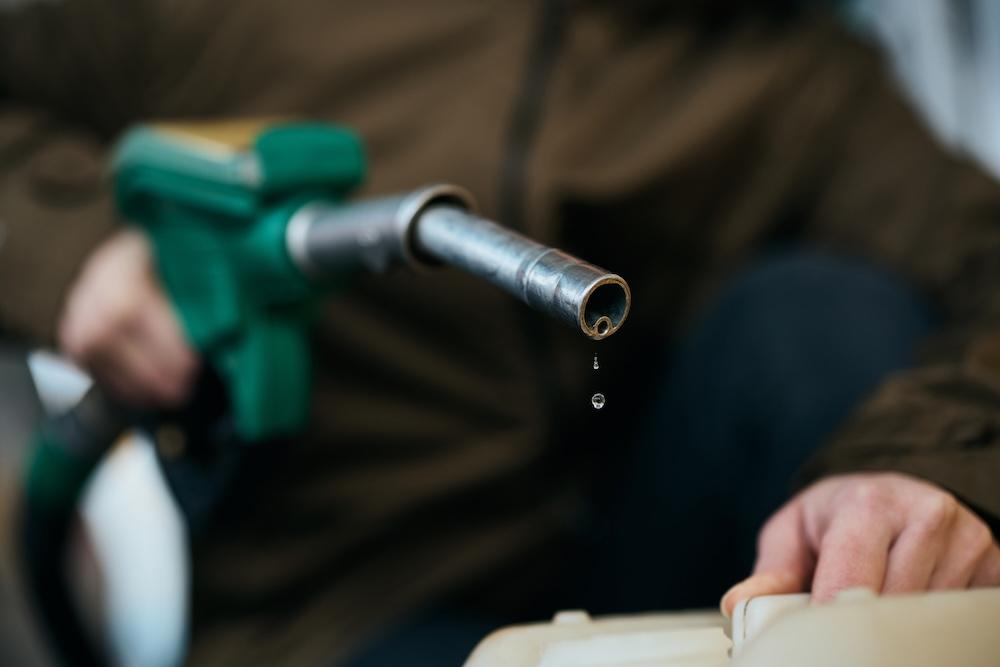
Fuel is one of those car costs you feel right away. In the EU, diesel prices in April 2026 were 33.7% higher than a year earlier, while petrol prices were up 13.6%, according to Eurostat. So it’s no surprise that many drivers feel like their next refuel keeps coming a little sooner than expected.
We’ve all heard the usual fuel-saving advice: don’t keep unnecessary weight in the car and check your tire pressure. These tips are useful, but they only scratch the surface.
In this guide, we’ll explore how you can actually reduce fuel consumption – from better driving habits to hidden car issues that can quietly burn through your hard-earned fuel money.
Quick checklist: what is wasting your fuel
Here are the main reasons why your fuel bill has been getting higher, aside from rising fuel prices:
- Driving behavior: hard acceleration, sudden braking, speeding, long idling, poor gear use
- Route conditions: short trips, heavy traffic, unnecessary detours, peak-hour driving
- State of the car: low tire pressure, extra weight, roof racks,
- Poor maintenance: overdue service, hidden faults
- Inaccurate tracking: not comparing fuel use over several refuels, missing sudden changes in consumption
First, understand your fuel consumption
Before changing your habits, get a baseline.
In the US, fuel economy is usually measured in miles per gallon. In many other markets, it is measured in liters per 100 km. Higher MPG means better fuel economy. Lower L/100 km means better fuel economy.
A simple MPG calculation looks like this:
- If you drive 400 miles and refill 16 gallons, your fuel economy is 25 MPG.
Most modern cars also show average and instant fuel consumption on the dashboard. Try comparing your fuel use on the same route when you drive smoothly versus when you accelerate and brake more aggressively.
For a more reliable baseline, track fuel use over three or four refuels. One trip can be affected by traffic, weather, or route choice. A few tanks give you a clearer picture.
You can also do this directly in the OBDeleven app – Trip tracker includes fuel insights and a fuel expenses tracker. It shows estimated trip costs, lets you add refuel records, and helps you understand how driving style and traffic conditions may affect fuel expenses. Over time, your logged refuels can make fuel insights more accurate and help you spot patterns in your driving costs.

1. Track trips before you try to save fuel
Most fuel-saving advice sounds simple: brake less, accelerate smoothly, avoid traffic, and keep your speed steady. But here’s the problem – you can’t improve what you don’t measure.
Driver feedback tools, like built-in car displays and smartphone apps, can help. And they’re not just a gimmick – drivers can actually improve their fuel economy by about 3% on average – and up to 10% when actively used.
OBDeleven Trip tracker is one of the options to consider. It automatically records your drives and helps you see how each trip, route, driving habit, and fuel expense affects your costs:

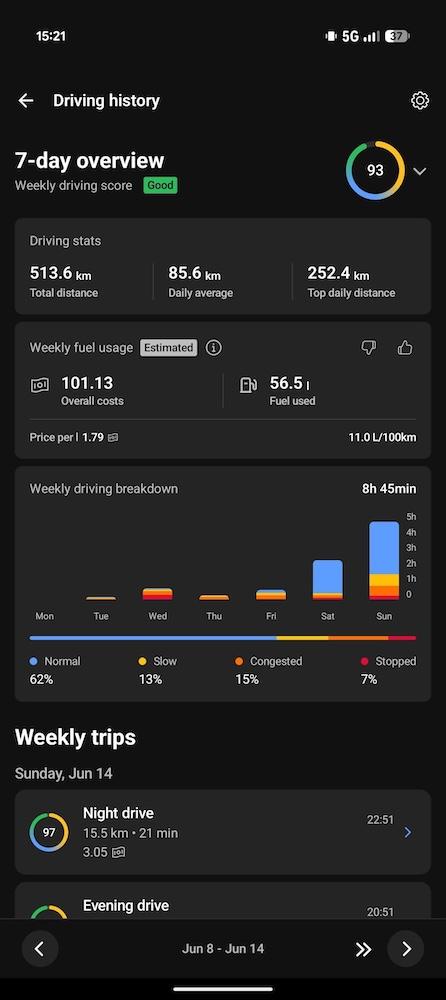
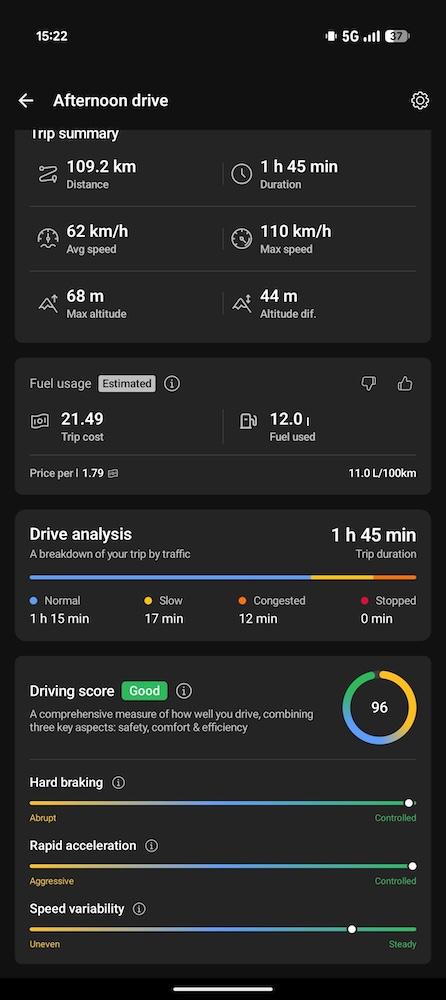
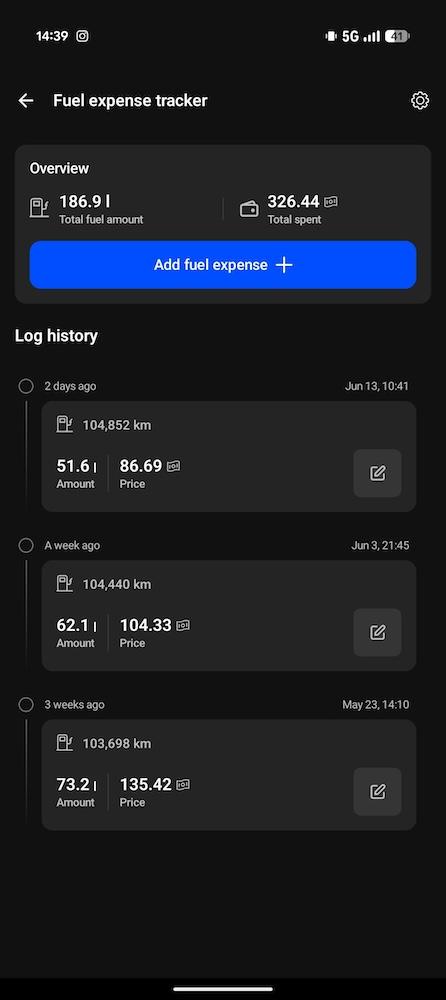
Instead of guessing why one commute is more expensive than another, you can compare fuel-wasting patterns and make smarter changes next time.
2. Drive smoothly instead of aggressively
Aggressive driving is one of the fastest ways to waste fuel – every hard launch from a traffic light and every late brake can cost you.
In fact, speeding, agressive driving leads to 23 % increase in fuel consumption as opposed to normal driving.
What can you do to lessen this? Here’s what to do in practice:
What can you do to lessen this? Here’s what to do in practice:
- Press the accelerator gently.
- Keep a steady speed.
- Look ahead so you can slow down early instead of braking at the last second.
A good rule: drive like there’s a full cup of coffee in the car. If your passengers are being pushed forward and back, your fuel economy is probably suffering too.
Want to see how smooth your drives really are in one place? Trip tracker gives every trip a Driving score based on acceleration, braking, and speed consistency. Over time, you can spot which habits make your drives smoother – and which ones make them more expensive.
3. Keep your speed steady and plan smarter routes
Speed changes waste fuel because your engine has to keep rebuilding momentum.
That’s why stop-and-go traffic, unnecessary bursts of speed, and inconsistent highway driving can all push fuel costs up. U.S. Department of Energy every extra 5 mph over 50 mph can feel like paying about $0.27 more per gallon.
So no, driving faster doesn’t always save you much time. But it can make every mile or kilometer more expensive.
Practical tips are simple:
- Keep a steady, sensible speed.
- Avoid rushing toward red lights.
- Leave more space between you and the car ahead.
- Choose routes with fewer stops when possible.
- Combine errands instead of making several short trips.
But if you want something more guiding, navigation apps like Waze can suggest the least traffic-heavy routes.
However, they usually don’t show your trip history, driving behavior, or fuel costs in one place. If you’d like to see such overviews and plan accordingly, OBDeleven’s Trip tracker is worth adding to your app library.
4. Cut the hidden fuel drains
Not all fuel waste comes from driving style. Some of it comes from small things you forget about: idling, roof racks, extra weight, and heavy A/C use.
You may be burning fuel for zero miles – idling can use around a quarter to half a gallon of fuel per hour, depending on engine size and air conditioning use.
Extra weight matters too. Every extra 100 pounds in your vehicle can reduce fuel economy by around 1%. Roof gear can be even worse. A large roof-top cargo box can reduce fuel by as much as 10% to 25% at interstate speeds.
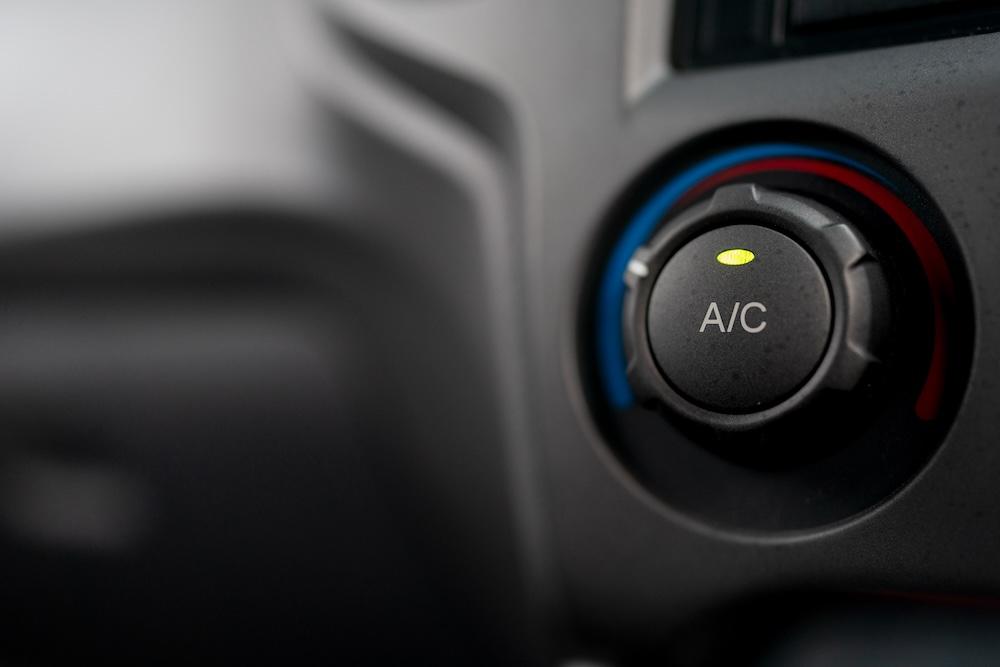
Air conditioning can also have a noticeable effect. Under very hot conditions, A/C use can reduce a conventional vehicle’s fuel economy by more than 25%, especially on short trips.
That doesn’t mean you should drive uncomfortably. It means you should avoid waste where it’s easy:
- Remove unused roof racks, boxes, and carriers.
- Clear unnecessary heavy items from the trunk.
- Turn the engine off during long, safe stops.
- Use A/C wisely and avoid extreme settings when moderate cooling is enough.
- Open the windows briefly to release heat, then close them at higher speeds.
5. Use diagnostics and maintenance to fix fuel-wasting issues
Sometimes, the problem isn’t your driving. It’s the car.
A poorly maintained vehicle can use more fuel because the engine has to work harder or burn fuel less efficiently. Old oil, under-inflated tires, clogged filters, bad spark plugs, misfires, faulty oxygen sensors, and unresolved fault codes can all hurt fuel economy.
Properly inflated tires can improve gas mileage by 0.6% on average and up to 3% in some cases. Bigger maintenance issues can cost even more. While fixing a serious problem, such as a faulty oxygen sensor, could improve mileage significantly.
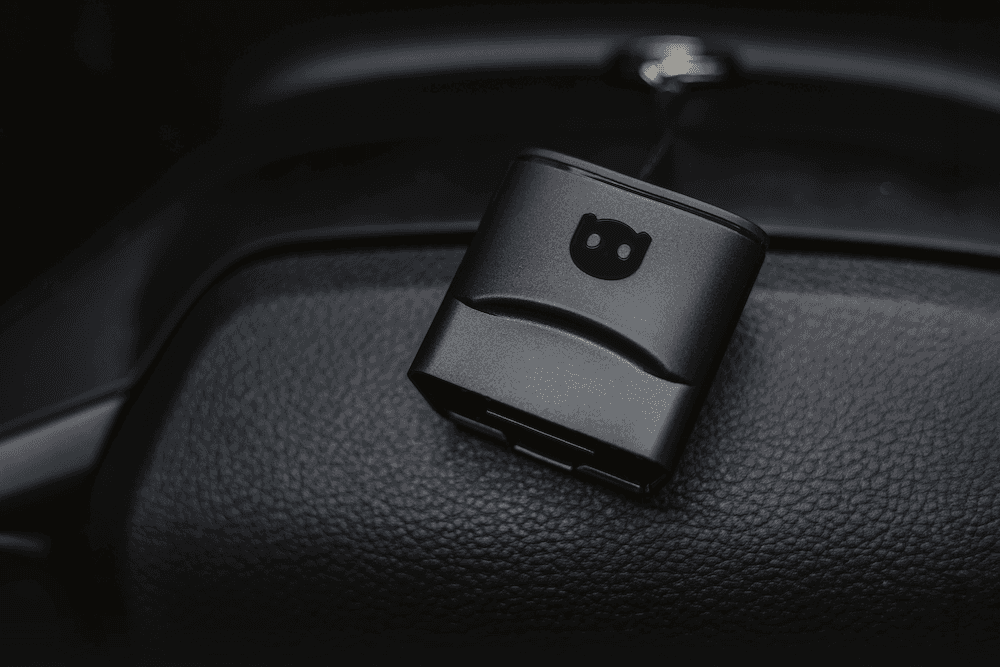
That’s why an OBD2 scanner like OBDeleven 3 can be useful. It lets you scan your car, read fault codes, and view live data from supported vehicles, helping you spot issues that may increase fuel consumption – such as misfires, sensor problems, or irregular engine behavior.
For example, if your fuel economy suddenly gets worse, you can scan the car for faults instead of guessing. If there’s an engine-related issue, you get a clearer starting point. After the repair, you can keep tracking your driving and fuel use to see whether the problem improved.
Tip: You can also use OBDeleven Maintenance reminders to stay ahead of routine service. Set reminders for oil changes, inspections, or parts replacements, and get notified 30, 7, or 1 day before service is due.
Bringing it all together
Fuel use is easier to understand and hack when you can see what’s happening across your trips, habits, and car condition.
OBDeleven’s Trip tracker can show how your routes, driving style, and fuel expenses change over time, while Driving score helps you spot patterns in acceleration, braking, and speed consistency. Regular diagnostics and Maintenance reminders can also help you catch possible car issues or upcoming service needs that might affect fuel economy.
Put it all together with the tips in this article, and you’ll have a clearer idea of where your fuel is going – and what you can do to spend less on it.


OBDeleven 3 device + 200 Credits
Includes OBDeleven 3 device and 200 Credits for unlocking car features with One-Click Apps
€114.99€91.99
20% OFF
Exclusive deal