#Buying a car
How to avoid lemon cars: An easy step-by-step guide



TL;DR: To avoid buying a lemon car, don’t rush the process. Do a careful visual check and test drive, watch for warning lights, verify mileage and service history, and always do a diagnostic scan or pre-purchase inspection at a reputable shop before buying. If you’re considering an EV or hybrid, check battery health too.
Lemon cars. No, not the ones you put in lemonade.
A “lemon” is a new or used car with serious defects that can’t be properly fixed, even after multiple repair attempts. In some countries, this gives buyers the right to request a refund or replacement under so-called lemon laws.
But legal protections don’t make the experience painless. Owning a lemon often means repeated breakdowns and ongoing uncertainty – especially if the car later ends up on the used market without full disclosure.
In this guide, you’ll learn how to spot and avoid lemon cars step by step, using a simple checklist and a few smart checks you can do yourself.
What makes a car a “lemon”?
A car usually isn’t considered a lemon because of one isolated issue. Instead, it’s a pattern of serious problems that keep returning despite repairs. Below are the most common signs that a car may be more trouble than it’s worth.
Repeated mechanical or electronic issues
If the same car problems keep coming back and can’t be properly diagnosed or fixed, it often points to deeper manufacturing or design faults.
Common examples include persistent engine or transmission issues, as well as faults in electronic control systems. In electric vehicles, recurring problems with the electric motor, inverter, or power electronics are also red flags.
Excessive time spent in the shop
A car that’s frequently out of service – especially early in ownership – is another strong warning sign. If repairs stretch on for days or weeks and multiple attempts don’t solve the issue, this could point to it being a lemon.
Poor or inconsistent repair history
Incomplete service records, repeated fixes for the same problem, or unclear documentation can all indicate a car with unresolved issues.
Battery degradation (EVs)
For EVs, the high-voltage battery is the most expensive and critical component. Rapid capacity loss or charging issues may suggest deeper problems that are difficult to resolve.
Flood or accident damage
Flood-damaged or poorly repaired accident cars can behave like lemons even if they don’t legally qualify as one. Electrical gremlins, corrosion, and long-term reliability issues here are regular culprits.
How to avoid lemon cars – a step-by-step checklist
You usually can’t tell whether a car is a lemon at first glance.
In some cases, unresolved problem vehicles make their way back onto the used car market, sometimes without clear disclosure.
Ideally, it’s best to get a pre-purchased inspection at a reputable shop or dealer, but there are also other practical ways to protect yourself.
1. Do a thorough visual check and test drive
Some warning signs are visible right away if you know where to look.
During the test drive, pay attention to unusual rattles, vibrations, or jolts, and notice whether anything changes before, during, or after driving.
Also check for:
- Uneven or mismatched tyres, which may indicate suspension or alignment issues
- Uneven trim, loose interior panels, missing fasteners, or exposed wiring
- Oil, coolant, or other fluid residue in the engine bay or under the car
These can point to rushed or low-quality repairs meant to hide ongoing problems.
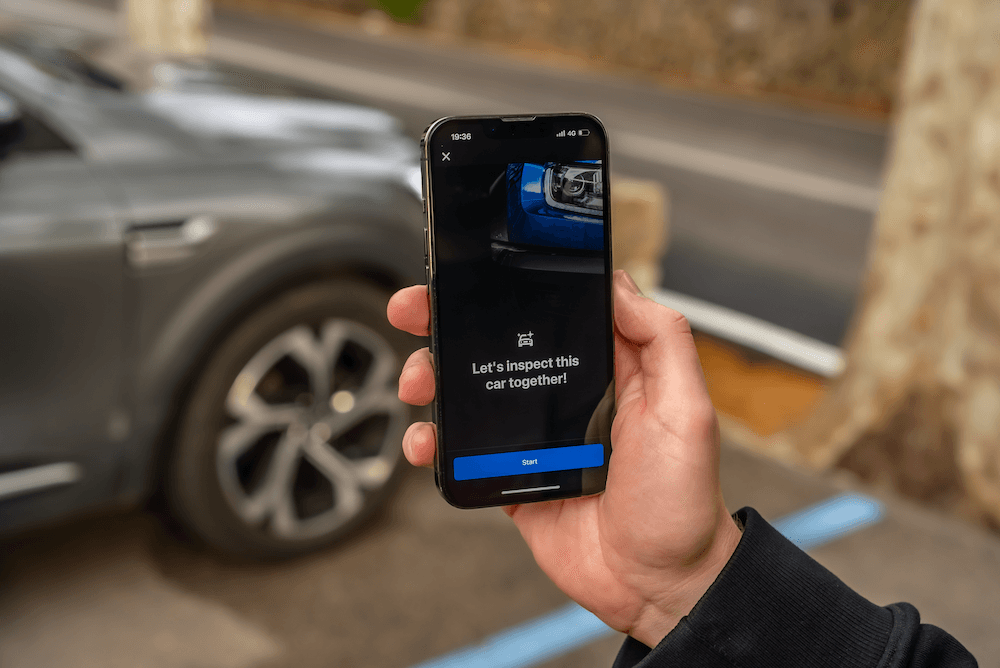
If the inspection process starts to feel overwhelming, OBDeleven’s in-app Used car checklist guides you through key checks step by step and is available for free, even without a device.

2. Check dashboard warning lights
When you start the car, look for warning lights that stay on or briefly appear and disappear. These can signal unresolved faults.
A dashboard that looks suspiciously “clean” after startup may also raise questions, as this could suggest some fault codes were recently manually cleared. If anything looks off, it’s best to get the car inspected at the shop or do a diagnostic scan with an OBD scanner.
3. Run a diagnostic scan
A diagnostic scan is one of the most effective ways to uncover hidden issues. Using an OBD scanner, you can check multiple control units at once and see whether any fault codes are stored – even if no warning lights are currently on.
With tools like OBDeleven, this isn’t limited to dealerships anymore. You can run a scan yourself at home or during a car viewing and quickly identify faults that deserve closer attention.
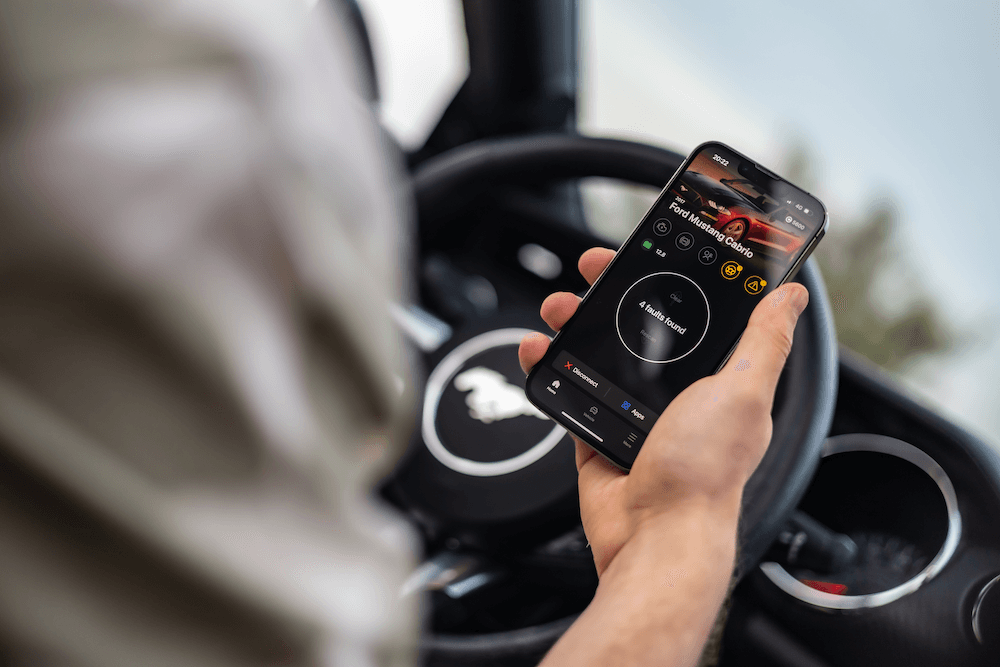
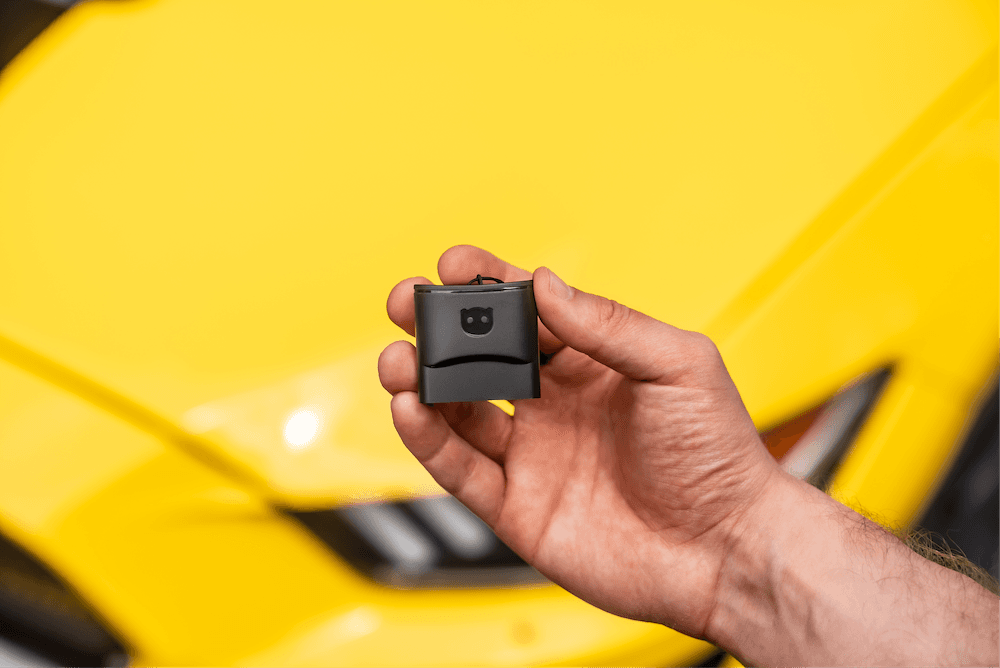
OBDeleven 3 supports basic diagnostics for most cars manufactured from 2008 onwards, with advanced brand-specific diagnostics available for officially licensed Volkswagen, BMW, Toyota Groups, US-made Ford, and Mercedes-Benz.
4. Check for mileage inconsistencies
Don’t forget to verify the car’s true mileage, especially if the price seems to be good to be true. Odometer rollback can make a car appear less used than it really is, sometimes in hopes of hiding a lemon.
First, check for excessive wear on the steering wheel, pedals, seats, or exterior. A vehicle that’s too worn out of its mileage may signal that the odometer reading is off.
Next, check whether mileage information is consistent across service stickers, inspection records, and the vehicle’s service history. You can also ask the seller for a vehicle history report or get one online.
Digital data matters too, if not more. You can check if mileage readings match across multiple control units with the help of OBDeleven’s Mileage check. Available on Volkswagen Group and BMW F and G Series vehicles, this feature makes it easier to spot inconsistencies.
We also have an in-depth article on how to How to check a car’s mileage properly and minimize the chances of falling victim to fraud.
5. Check for open recalls
Recalls mean the manufacturer has already identified a widespread issue, often related to safety or reliability. This means the car needs to be brought back to the manufacturer and fixed, but owners don’t always follow through with it.
If a car has open recalls, confirm with the seller or dealer that the required repairs were completed. Unresolved recalls can lead to bigger problems later on.
You can check recall status using public databases such as NHTSA (US), Safety Gate Alerts (EU), or directly on the manufacturer’s website.
6. Extra: check battery health (EVs and hybrids)
Start by reviewing the warranty and service history. Most EVs come with long battery warranties, and records can show whether the battery has already been repaired or flagged for issues.
Next, pay attention to the real-world range during a test drive. A noticeably shorter range than expected for the car’s age and mileage may indicate excessive degradation.
For a quick assessment, OBDeleven offers Hybrid battery check (for Toyota and Lexus), helping you understand battery status better before committing to a purchase.
Common red flags when buying a used car
Inspecting a car properly takes time, so be cautious of sellers who try to rush the process.
Watch out for:
- Pressure to decide quickly
- Refusal to allow a diagnostic scan
- Recently cleared fault codes or warning lights
- Missing, inconsistent, or unclear service history
- Mileage that doesn’t match visible wear
- EV range dropping unusually fast for the car’s age
For a deeper dive, see our full guide on possible red flags when buying a car.
Can OBDeleven guarantee you won’t buy a lemon?
No tool can guarantee 100% protection from buying a lemon.
However, combining smart prevention steps – visual checks, mileage verification, recall research, and diagnostic scans – can dramatically reduce the risk.
What matters most is staying informed and prepared, so you can ask the right questions and make a confident decision.
Final thoughts
Lemon cars aren’t always easy to spot, but they’re often avoidable with the right checks and a bit of preparation.
Tools like OBDeleven help bring those checks together in one place – from diagnostics and mileage verification to battery health insights. That can save you time, money, and frustration when buying a car, and continue to support you as a practical car-care companion long after the purchase.
Basically, when life gives you lemons, get OBDeleven.


OBDeleven 3 device + 200 Credits
Includes OBDeleven 3 device and 200 Credits for unlocking car features with One-Click Apps
€114.99
No paid plan required
Disclaimer: Advice, how-to guides, and car care tips on our blog are intended as helpful resources for general maintenance and repairs. While we strive for accuracy, the information is provided to the best of our knowledge and should be used at your own discretion and risk.
Always refer to your vehicle's owner's manual or consult a certified mechanic for specific repair details and safety procedures.
Always refer to your vehicle's owner's manual or consult a certified mechanic for specific repair details and safety procedures.